
Uncategorized
Chemyo quality control
Chemyo Quality Control & Lab Reports Explained
Learn how Chemyo research-product documentation is organized, what common analytical report types mean, how identity, purity and concentration information differ, and how to locate product-specific laboratory reports.
Identity & Analytical Data
Product-specific documentation can provide additional information about the material referenced in a report.
Liquid Product Analysis
Concentration reports can provide information about the measured amount of compound in a liquid formulation.
What Does Chemyo Quality Control Mean?
Chemyo quality control refers to the product information, batch-related documentation and available analytical records presented alongside research materials in the catalog.
Product specifications such as compound identity, concentration, quantity and physical format provide the first layer of information. Available laboratory documentation can add another layer by providing analytical data associated with a particular product, sample or batch.
The dedicated Chemyo Quality Control page explains the site’s broader documentation approach, while the Chemyo Lab Reports & COA Library organizes available reports by research product.
A product page describes the material being offered. Analytical documentation provides additional information about the particular material, sample or batch referenced in the report.
Types of Chemyo Lab Reports
Different analytical methods answer different questions. This is why a research product may have more than one type of laboratory document available.
HPLC
Chromatographic analysis commonly used to examine components within a sample and provide purity-related information.
FTIR
Spectroscopic analysis that can provide information related to molecular characteristics and sample identification.
Concentration
Analytical information relevant to the measured concentration of a compound in a liquid formulation.
COA
A certificate or analytical summary containing product, batch or test-related information where available.
What Is an HPLC Report?
HPLC stands for High-Performance Liquid Chromatography. It is an analytical technique used in laboratories to separate and examine components within a sample.
In research-product documentation, HPLC information may be useful when evaluating the relative composition of a sample and the presence of the target material compared with other detectable components.
A report should still be interpreted in relation to the sample identified on the document. One HPLC result should not automatically be assumed to represent unrelated products or every future batch.
What Is an FTIR Report?
FTIR stands for Fourier Transform Infrared Spectroscopy. The technique examines how a sample interacts with infrared radiation and can produce a characteristic spectrum.
Spectral information can contribute to compound-identification work when the observed characteristics are compared with appropriate reference information.
Some products in the Chemyo Lab Reports Library have combined FTIR/HPLC documentation, allowing multiple analytical results to be reviewed together.
What Is Concentration Testing?
Concentration is particularly relevant to Chemyo research solutions because liquid products are labeled according to the amount of compound present per unit of volume.
A product listed at 25mg/ml, for example, is describing the stated amount of research material per milliliter of solution. Concentration analysis can provide additional information about the measured formulation.
The product page states the intended concentration of the liquid formulation.
A concentration report may provide measured information associated with the tested sample.
The result should be matched to the relevant product, sample or batch referenced by the documentation.
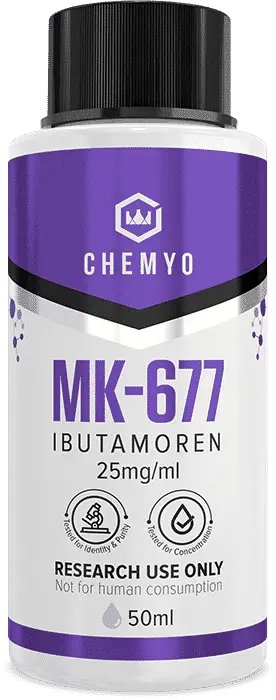
MK-677 Lab Documentation
The MK-677 Ibutamoren Solution provides a useful example of how product specifications and laboratory documentation can work together.
The product listing identifies the research format and concentration, while the current report library contains FTIR/HPLC and concentration documentation associated with the MK-677 solution.
Researchers can therefore review the labeled product specifications and the available analytical documents as separate but complementary pieces of information.
What Is a COA?
COA commonly refers to a Certificate of Analysis. Depending on the testing workflow, a COA may summarize information such as the material tested, identifying information, analytical results or laboratory references.
A COA should not be treated as a generic marketing badge. The useful information is found in the details of the document itself: what material was tested, which batch or sample is referenced, what analytical method was used and what result was reported.
The Lab Reports & COA Library provides one location for reviewing available documentation across the catalog.
Why Batch Information Matters
Research materials may be manufactured, prepared or analyzed in separate production lots. Batch or sample identifiers can help connect a laboratory document with the material that was actually evaluated.
This matters because analytical documentation should not be separated from its context. A report associated with one sample does not automatically establish the characteristics of every different production lot.
Product name, sample identifier, batch information, analytical method and report date can all help establish what a laboratory document actually refers to.
How to Review a Chemyo Lab Report
Laboratory documents are more useful when reviewed systematically instead of looking only at a headline purity number or document title.
| Check | What to Review | Why It Matters |
|---|---|---|
| Product Name | Compound named on the report | Confirms which material the document is intended to describe |
| Batch / Sample | Lot or sample identifier where provided | Helps connect the document to a particular material |
| Test Type | HPLC, FTIR, concentration or other method | Explains what type of analytical information the report provides |
| Result | Reported analytical findings | Provides the actual measurement or observation |
| Date | Testing or report date | Provides temporal context for the documentation |
| Product Page | Current specifications for the product | Allows report information to be compared with the listed research material |
Examples of Products With Laboratory Documentation
Report availability varies between products. Some products have one analytical document while others have several report types available.
MK-677 Ibutamoren
Includes available FTIR/HPLC and concentration documentation.
View Product → Solution DocumentationRAD-140 Testolone
Includes product-specific analytical and concentration documentation where available.
View Product → Powder DocumentationRU58841 Powder
Powder-format research material with available FTIR/HPLC documentation.
View Product → Powder DocumentationMK-677 Powder
Powder research listing with available analytical documentation.
View Product → Quality InformationQuality Control
Review the site’s broader approach to product specifications and analytical documentation.
Learn More → Complete LibraryLab Reports & COAs
Search available documentation across research solutions, powders and value packs.
Browse Reports →Why Analytical Documentation Matters More Than Marketing Claims
Research-product evaluation should rely on specific, reviewable information rather than broad statements such as “high quality” or “premium.”
Product specifications, analytical methods, sample identifiers and reported results provide information that can actually be examined and compared.
This is why the strongest research-product pages connect the product listing with available supporting documentation instead of relying on promotional language alone.
Quality Documentation for Solutions vs Powders
The most relevant analytical information can differ depending on product format.
| Documentation | Research Solutions | Research Powders |
|---|---|---|
| Identity | Relevant | Relevant |
| Purity / HPLC | May be available | May be available |
| FTIR | May be available | May be available |
| Concentration | Especially relevant to liquid formulations | Generally not the primary powder specification |
| Package Quantity | Volume + concentration | Total measured powder quantity |
| Learn More | Research Solutions Guide | Research Powders Guide |
Using the Chemyo Lab Reports & COA Library
The Chemyo Lab Reports & COA Library provides a central location for product-specific analytical documentation.
Reports are organized by product so researchers can locate the documentation associated with a particular material rather than searching through unrelated files.
The library currently includes solutions, powders and value packs, with available report types labeled so documents can be identified more easily.

Frequently Asked Questions About Chemyo Quality Control
Where can I find Chemyo lab reports?
Available analytical documentation can be browsed in the Chemyo Lab Reports & COA Library .
What types of Chemyo lab reports are available?
Depending on the product, available documentation may include HPLC, FTIR, concentration analysis, COAs or combined analytical reports.
What does HPLC tell researchers?
HPLC separates and examines components within a sample and can provide information related to sample composition and purity.
What does FTIR testing show?
FTIR produces infrared spectral information that can contribute to material-identification work when compared with appropriate reference data.
What is concentration testing?
Concentration analysis provides information about the measured amount of a research compound within a liquid formulation.
Does one report apply to every batch?
Not necessarily. Analytical reports should be interpreted in relation to the specific product, sample or batch referenced in the document.
What is a COA?
COA commonly means Certificate of Analysis. It may summarize product, sample, batch or analytical information associated with a tested material.
Are lab reports a substitute for product specifications?
No. Product specifications and analytical documentation provide different information and are most useful when reviewed together.
Understanding Chemyo Quality Documentation
Chemyo quality control information connects research-product specifications with available laboratory documentation. Reports such as HPLC, FTIR, concentration analysis and COAs can provide different types of analytical information about the material referenced in each document.
The most useful approach is to review the product page, report type, sample or batch information and analytical result together rather than treating a single number or document title as the entire product record.
For an overview of the complete research catalog, read What Is Chemyo? Complete Guide to Chemyo Research Products .
Products and analytical documents discussed on this page relate to laboratory research materials and are not intended as medical guidance.
Review Chemyo Laboratory Documentation
Browse available product-specific reports or learn more about the quality-control information connected to the research catalog.
