
Uncategorized
Compare Chemyo products
How to Compare Chemyo Products
Learn how to compare Chemyob solutions, powders, quantities, concentrations, product specifications and available lab reports before evaluating individual research materials.

How Should Chemyo Research Products Be Compared?
Comparing Chemyo research products should involve more than looking at a compound name or package image. Different listings can vary by research format, concentration, total quantity, volume, chemical specifications and available analytical documentation.
A useful comparison starts by identifying the research material and then reviewing the way that material is supplied. The Chemyo research catalog includes liquid research solutions , research powders and research value packs .
Identify the Compound
Confirm the exact research material listed on the product page.
Check the Format
Determine whether the product is a liquid solution, powder or bundled research format.
Review Specifications
Compare concentration, quantity, volume, identifiers and storage information.
Review Documentation
Check available analytical reports associated with the product or sample.
Chemyo Solutions vs Chemyo Powders
One of the first decisions when comparing research materials is understanding the format in which the compound is supplied.
Chemyo Research Solutions
Liquid products are primarily compared using the compound name, labeled concentration and total bottle volume.
Browse Solutions → POWDER FORMATChemyo Research Powders
Powder products are primarily compared using compound identity, total supplied quantity, physical form and associated documentation.
Browse Powders →For deeper explanations, see the Chemyo Research Solutions Guide and Chemyo Research Powders Guide .
Compare the Complete Product Specifications
The compound name provides the starting point, but individual product specifications provide the information needed for a more meaningful comparison.
| Specification | Research Solutions | Research Powders | Why Review It? |
|---|---|---|---|
| Compound Name | Yes | Yes | Identifies the research material being offered |
| Concentration | Important | Generally not applicable | Indicates compound amount per unit of liquid volume |
| Total Volume | Important | Not applicable | Shows how much liquid formulation is supplied |
| Powder Quantity | Not applicable | Important | Indicates the total measured powder supplied |
| CAS Number | May be listed | May be listed | Provides an additional chemical identifier |
| Storage Information | Product-specific | Product-specific | Helps identify appropriate laboratory storage |
| Lab Documentation | May be available | May be available | Adds analytical information associated with the product or sample |
Concentration, Volume and Quantity Are Not the Same
Research-product comparisons can become confusing when concentration, total volume and total quantity are treated as interchangeable measurements.
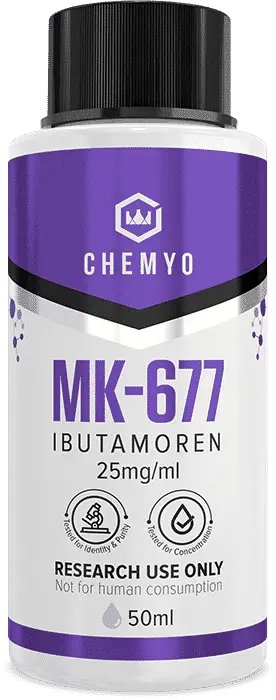
A liquid product listed as 25mg/ml in a 50ml bottle contains two separate specifications: concentration and total volume.
A powder listed as 1g, by contrast, is describing the total amount of powder material supplied.
Compare liquid products using concentration and volume, while powder products should be compared using the supplied quantity and compound-specific information.
MK-677 Solution vs MK-677 Powder
The same research compound can sometimes be available in more than one format.
The MK-677 Ibutamoren Solution is presented as a liquid research formulation with a labeled concentration and bottle volume.
The MK-677 Ibutamoren Powder provides the compound in a measured powder format.
Although the compound name is similar, the format and primary specifications are different. This is why researchers should compare the complete product listing rather than assuming the two products are interchangeable.
Compare Available Chemyo Lab Reports
Product specifications describe the listed research material. Available laboratory documentation can provide additional information associated with a specific product, sample or batch.
The Chemyo Lab Reports & COA Library organizes available analytical documents by product.
Can provide information related to components within a sample and purity-related analysis.
Provides infrared spectral information that can contribute to material-identification work.
Particularly relevant when reviewing liquid research products with labeled concentrations.
May summarize analytical information relating to a product, sample or batch.
Can help connect documentation with the material referenced by a report.
Gives important context about when the analytical work was performed or documented.
Product Information vs Quality-Control Documentation
Product listings and analytical reports answer different questions.
A product page tells researchers what is being offered: compound name, format, concentration or quantity, package size and other specifications.
Analytical documentation provides information associated with a material that was tested.
The most useful evaluation considers both. Visit Chemyo Quality Control or read Chemyo Quality Control & Lab Reports Explained for a more detailed explanation.
8 Things to Check Before Comparing Research Products
- Exact compound name
- Research format: solution, powder or value pack
- Concentration for liquid products
- Total bottle volume for liquid products
- Total powder quantity where applicable
- Compound-specific chemical information
- Storage and handling information shown on the product page
- Available analytical documentation and report context
Following the same comparison process across products makes it easier to evaluate the catalog consistently rather than focusing on one isolated specification.
How Should Chemyo Value Packs Be Compared?
Chemyo value packs combine selected research products into predefined bundles. A bundle should therefore be evaluated by reviewing the individual materials included within it.
Researchers should not treat a value pack as a single compound. Instead, review each included product’s format, specification and available analytical documentation.
Continue Exploring the Chemyo Research Guides
This comparison guide connects the major topics in the Chemyo research-information cluster.
What Is Chemyo?
Start with the complete overview of the catalog, product formats and research resources.
Read Guide → GUIDE 02Chemyo Research Solutions
Learn how liquid research products, concentrations and bottle volumes are structured.
Read Guide → GUIDE 03Chemyo Research Powders
Understand powder quantities, product specifications and research-format differences.
Read Guide → GUIDE 04Quality Control & Lab Reports
Learn how HPLC, FTIR, concentration testing and COAs fit into research-product documentation.
Read Guide →Frequently Asked Questions About Comparing Chemyo Products
What should I compare first?
Start with the exact compound and product format. Then review concentration or quantity, package size, specifications and available documentation.
What is the difference between a solution and a powder?
Solutions provide a prepared liquid formulation with a labeled concentration, while powders provide a measured quantity of research material in powder form.
Is bottle size the same as concentration?
No. Bottle volume describes the total amount of liquid supplied, while concentration describes the amount of compound per unit of liquid volume.
Where can I find Chemyo lab reports?
Available reports can be browsed through the Chemyo Lab Reports & COA Library .
Does one lab report apply to every product batch?
Not necessarily. Reports should be reviewed in relation to the specific product, sample or batch referenced by the document.
Should research products be compared only by price?
No. Product format, concentration, quantity, specifications and available analytical documentation provide important context beyond price alone.
Are these products intended for human consumption?
No. Products presented through the research catalog are intended for laboratory research purposes and are not intended for human consumption.
A Better Way to Compare Chemyo Research Products
The most useful product comparison combines format, specifications and available analytical documentation.
Liquid products should be evaluated using factors such as compound identity, concentration and total volume. Powder products should be evaluated using compound identity, supplied quantity, physical form and other product-specific specifications.
Available laboratory reports add another layer of information by providing analytical documentation associated with particular products, samples or batches.
Researchers can start with the complete Chemyo research catalog and use the Lab Reports Library and Quality Control resources when additional product information is available.
Research compounds discussed on this page are intended for laboratory research purposes only and are not intended for human consumption.
Compare Chemyo Research Products
Browse available research formats, compare product specifications and review available analytical documentation across the catalog.
